Ministry of Health and Social Services with support from the Government of Japan through the World Health Organization Namibia has been implementing a project to address severe acute malnutrition in six-regions - Khomas, Ohangwena, Omusati, Oshana, Oshikoto and Hardap regions, resulting in an increased uptake of nutrition interventions in the regions. The project received funding from the Government of Japan of USD 750,000.00 from 1 February 2022- 28 February 2023.
WHO Namibia and the Namibia Red Cross Society partnered specifically to intensify risk communication and community engagement in at least 70 percent of households in communities with high malnutrition in the Khomas, Omusati and Ohangwena regions with health education messages on nutrition.
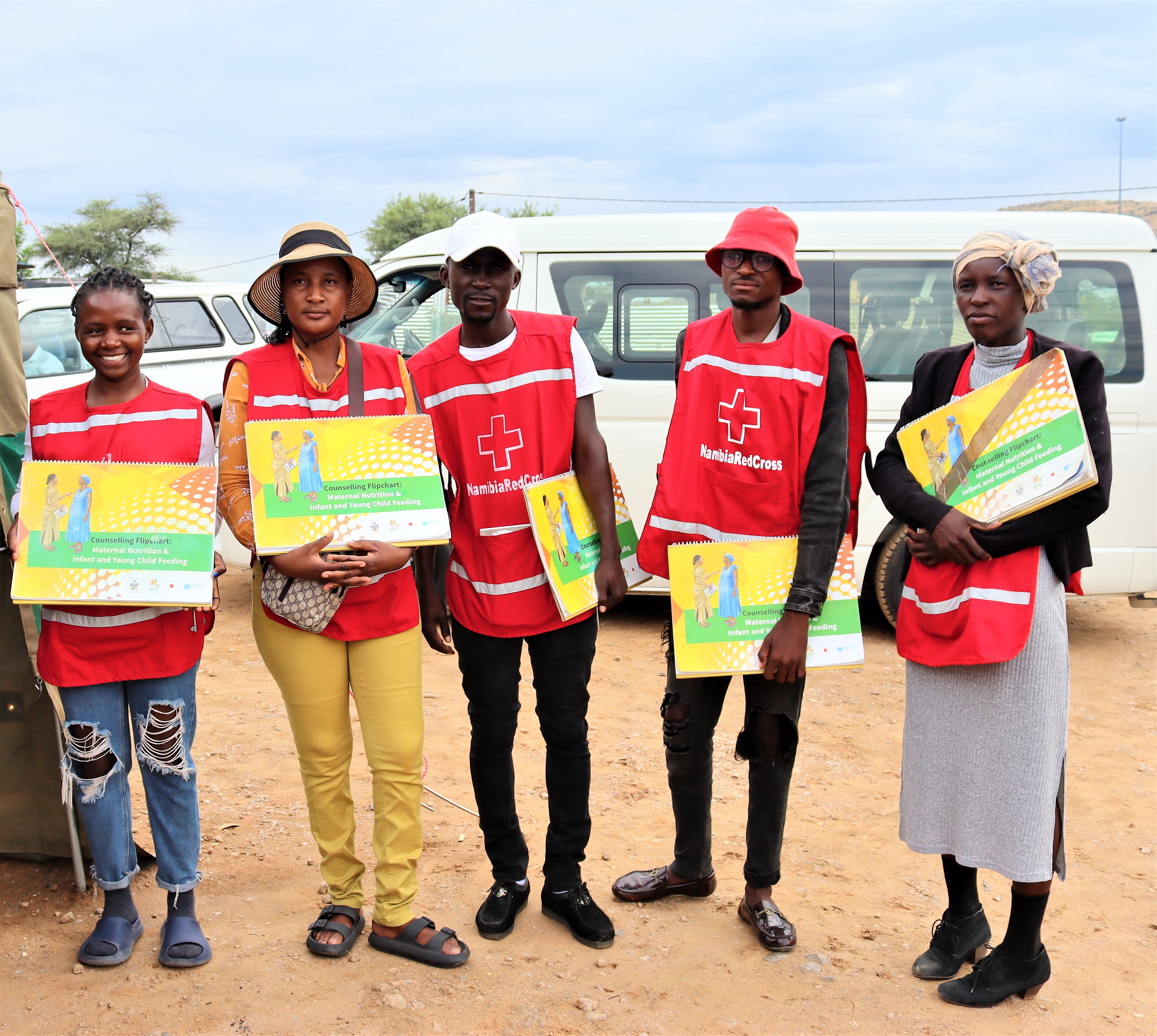
The 26-year old has been working as a Community Health Worker since February of this year.
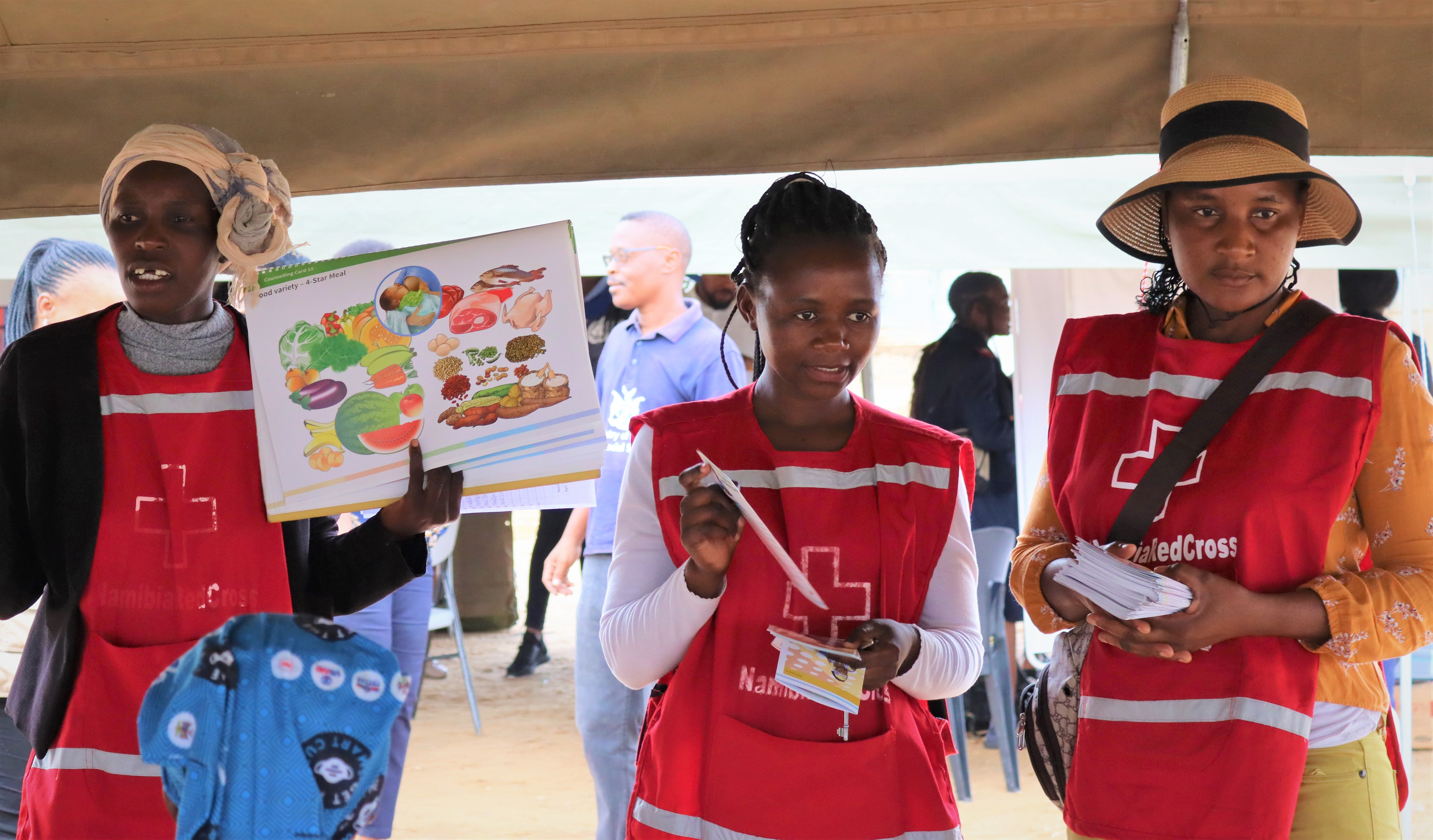
In her backpack is a red beep with words “Red Cross” which she uses as identification when doing field work. She also has a pen, a notebook, informational pamphlets and a big textbook which she uses when teaching about nutrition.
Johannes and her co-workers walk from house to house in the Tobias Hainyeko, Moses Garoeb and parts of Samora Machel constituencies, educating pregnant women and breastfeeding mothers on the importance of nutrition.
Their goal is to increase awareness of nutritional practices through Risk Communication and Community Engagement (RCCE) interventions.
Johannes and her co-workers were trained by officials from the Ministry of Health and Social Services as well as the NRCS as part of the nutrition project funded by the World Health Organisation (WHO) and the Japanese Government. The total cost of the project is approximately USD 750,000.00.
The project aimed to reach at least 70 percent of households in communities with high malnutrition in the Khomas, Omusati and Ohangwena regions with health education messages on nutrition.
The population targeted with the nutrition messages are breastfeeding mothers, pregnant women, babies and young children. By reaching out to this target group it is hoped that moderate and severe acute malnutrition among women and children in the community and healthcare facilities would be prevented and managed .
A number of activities have been implemented as part of the project, including strengthening the capacity of community based health workers such as Johannes to effectively provide nutrition services to women and children in the community.
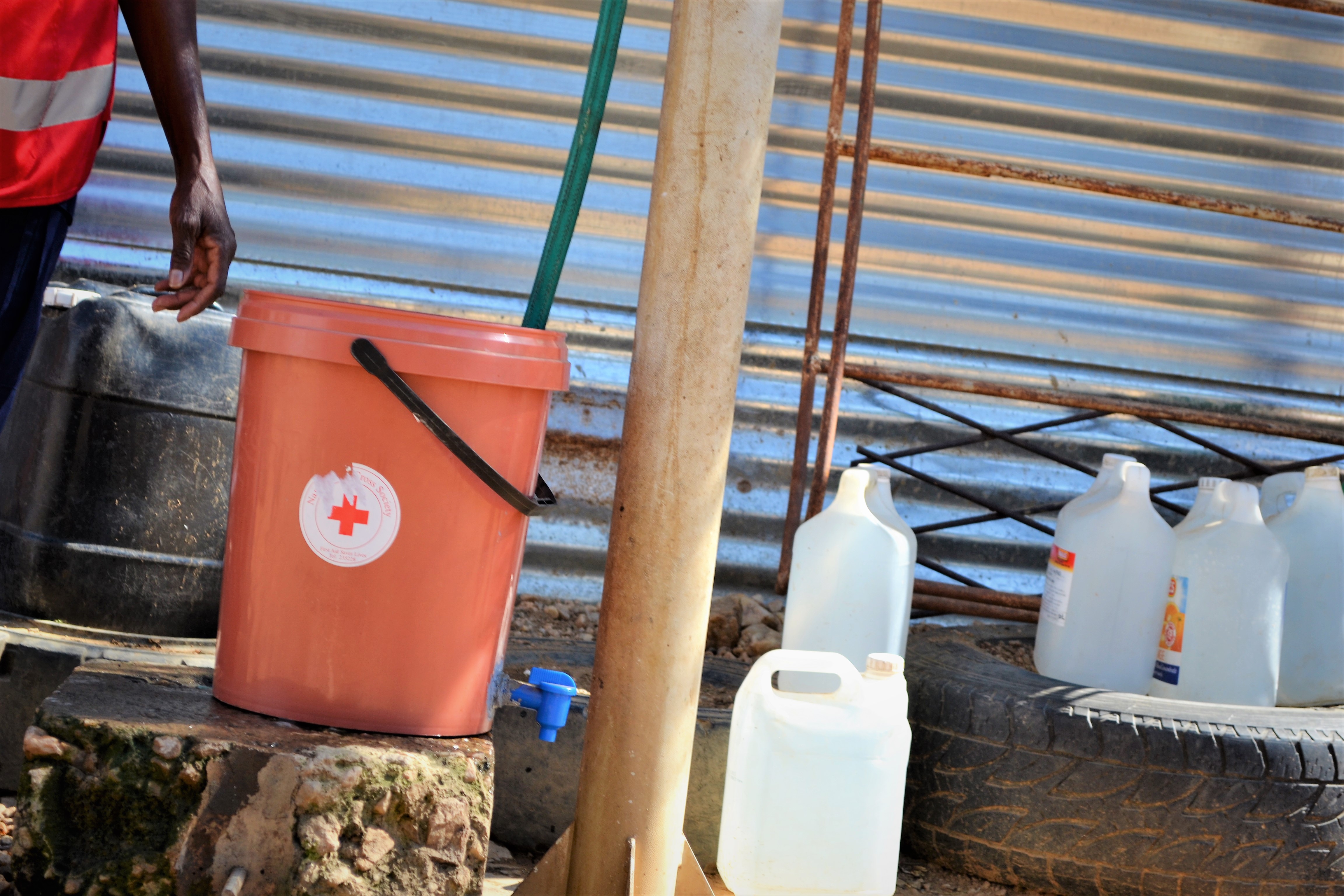
There is however a change of plan when they learn that a representative of the WHO will be joining them in their field work. “In that case, it’s best if we go in the field and show her how we walk from house to house sharing information with the community,” the team reasons.
Our first step is a communal tap located between Ombili and Oshitenda informal settlement and there is a group of young women, some nursing small children, others washing clothes and others chit-chatting aimlessly. Johannes nervously introduces herself to the women in English while her teammates look on.
But the young women do not seem interested. She then gives out a few pamphlets on ‘Nutrition during pregnancy and breastfeeding’ and ‘How to feed a baby after 6 months’ and moves on.
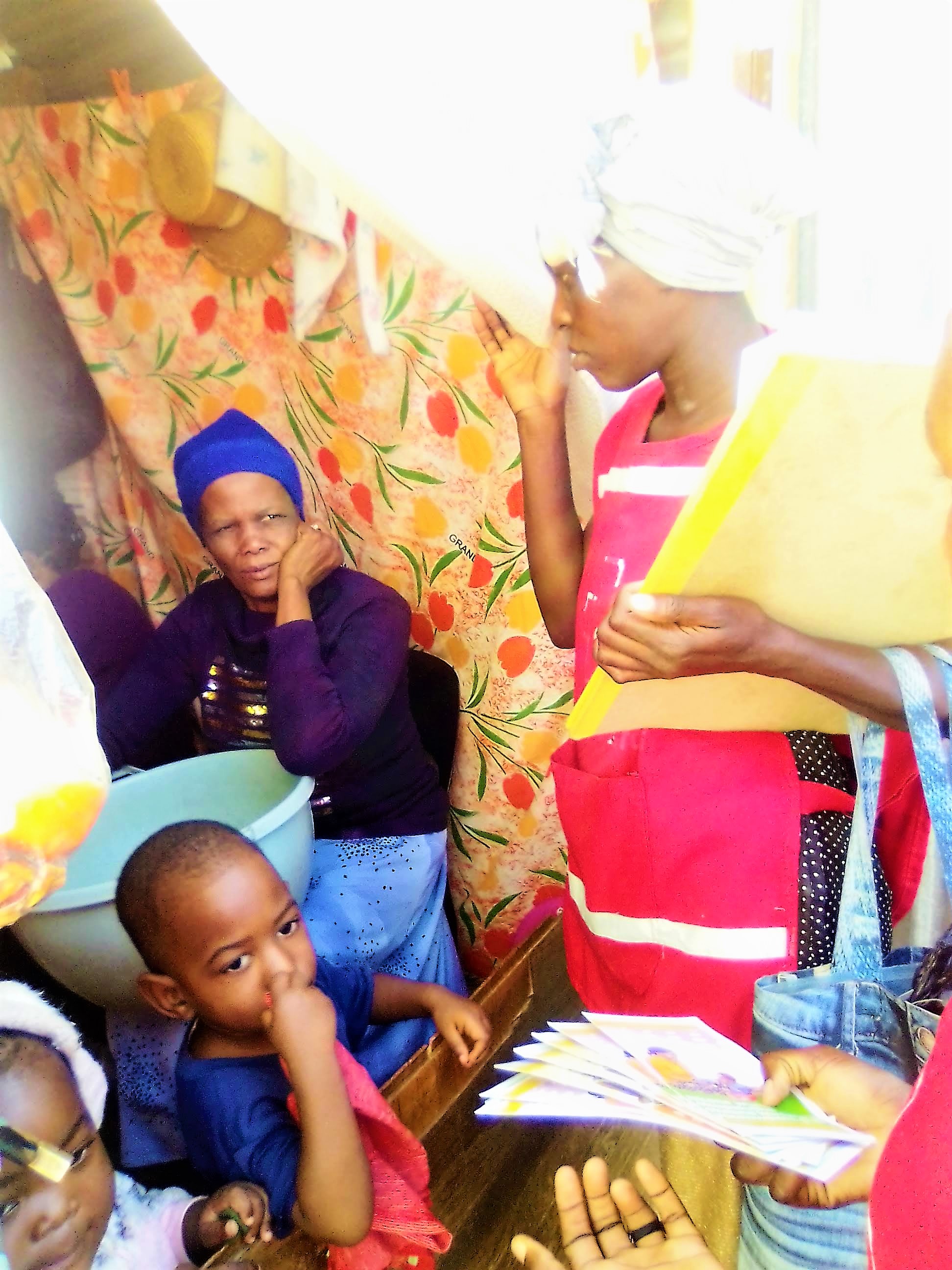
An elderly woman is interested in what the team has to say and invites the volunteers into her zinc-house. Inside the house is another elderly woman and about seven children whose ages range from two months to three years. The two women run a day-care where working mothers leave the children during work hours.
“Only two of the children here are my grand-children. The rest are from the community,” explains the woman who welcomed the volunteers. She then listens carefully as Johannes tells her about the importance of breastfeeding and eating nutritious food, especially while lactating. The woman then follows up with a question.
She wanted to know if it was correct for a nursing mother to also feed her baby with water three months into breastfeeding.
“A mother should try by all means to breastfeed her child for the first six months. She can slowly introduce her child to water and food after six months but she really has to try to breastfeed exclusively for six months,” explains Johannes emphatically.
She further explained that a working mother can express the breast milk and leave it for the caretaker to feed the baby. “Breastmilk is very important because it contains all the nutrients a baby needs but the mother also needs to eat nutritious food for the benefit of both her and the baby,”Johannes explains.
She also touched on the subject of contraceptives and explained that spacing between births is important for both the mother and her children.
She then gave the two women pamphlets and urged them to pass on the message to the children’s mothers. “Now that you have given us information about nutrition can you atleast give us some bananas?”, the elderly woman jokes to which Johannes responds “we only give out information on nutrition”.
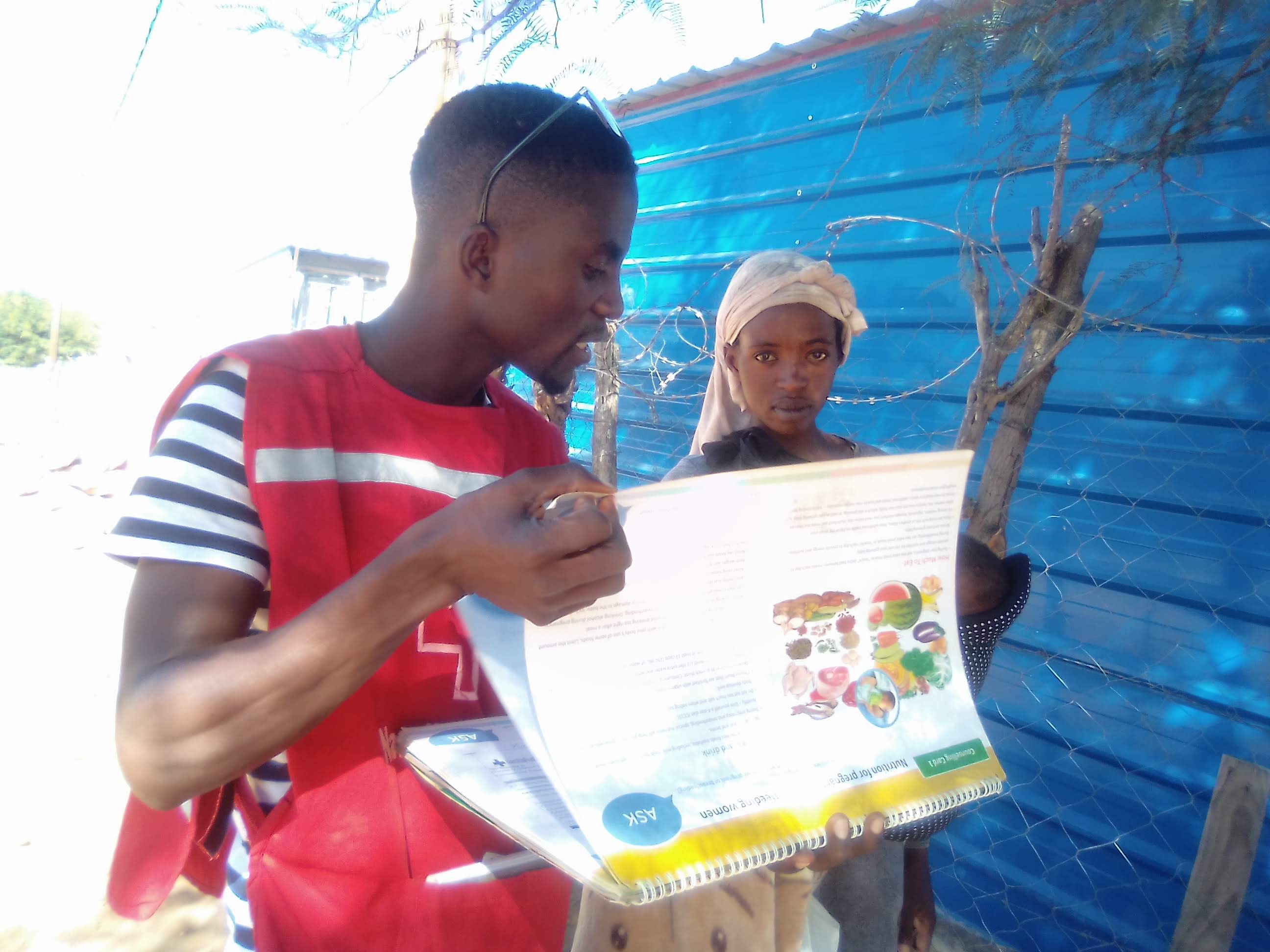
“I have had high blood pressure since 2014 and when I gave birth the nurses told me that they could not put me on contraceptives due to my condition. Johannes’ co-worker, Martha Angula advised her to go back to the nearest health facility to seek further advice and medical assessment.
The team continued to talk to more people, including men who were with their partners. Along the way, the team met two teenage mothers.
One of them is a 19-year old mother of a two month old baby. The teenage mother is from Omafo in the Ohangwena region and she has never gone to school. She did not seem to have any knowledge about contraceptives but shared that she currently lives with her maternal aunt in Windhoek.
The other teenage mother is Betty Nekongo who is due to deliver her baby in a few weeks. The Grade 9 drop-out said she plans to go back to school next year. “I want to study medicine and be a doctor one day. So, I will complete high school,” says Nekongo, adding that she will be more focused when she goes back to school.
“What are you writing? Do you have food for us?”. “There is nothing to give. We are just encouraging pregnant and breastfeeding women to buy and eat nutritious food. If you can sacrifice a few beers you will be able to afford some nutritious food,” Angula encouraged one of the women.
“That is the complaint (asking for food) we get most of the time when we are in the community. People are always asking us for food or condoms. Those are the demands we receive the most,” said Tauno Jacob, a NRCS community health worker.
Meanwhile, Angula explains that when the team comes across sick people they usually refer them to seek medical attention at the nearest health facility. They also refer individuals who are in dire need of food to the relevant constituency office for further assistance.
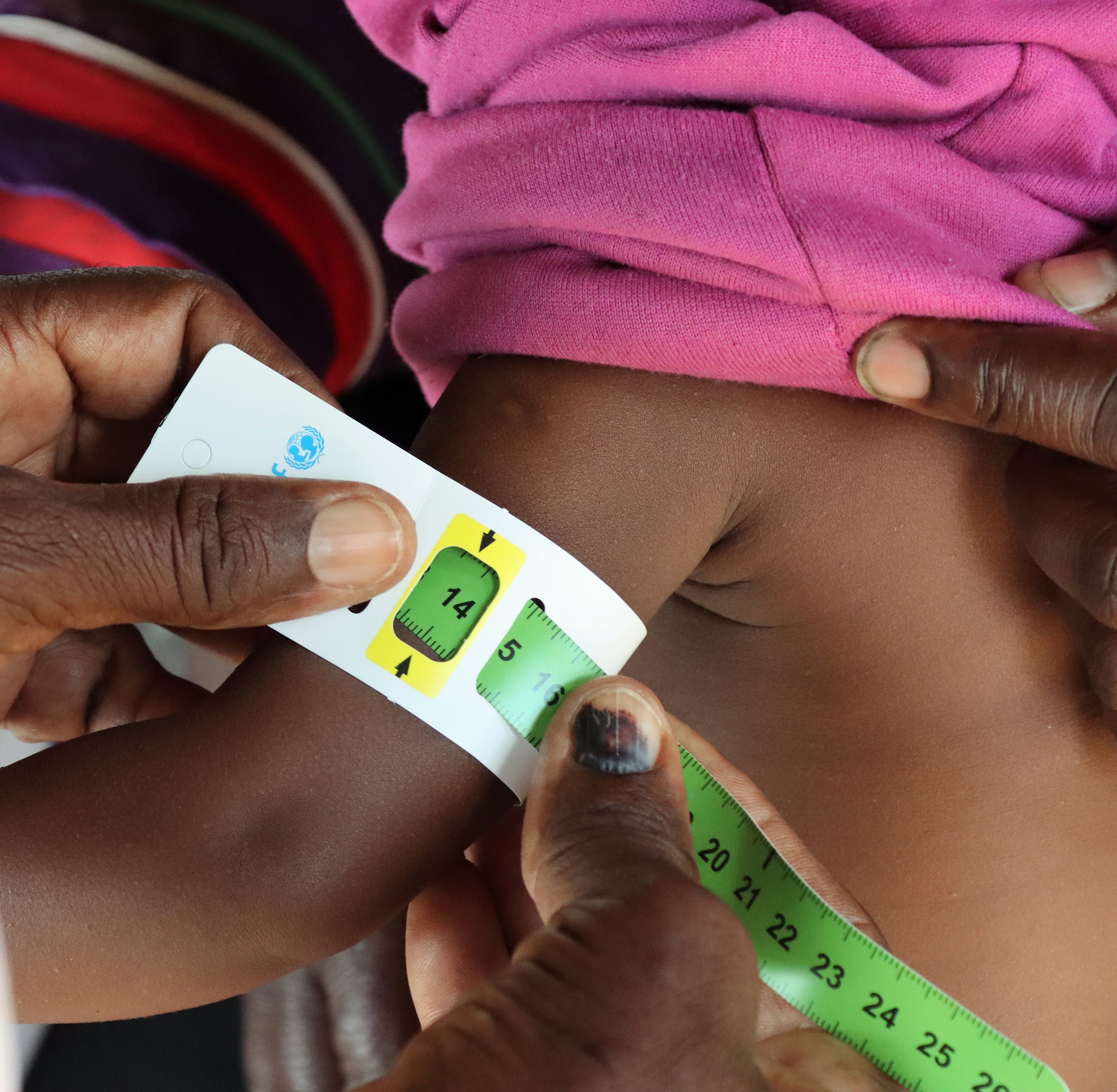
The malnourished cases are also referred to the health facilities and they follow up with these patients in three days to be sure that they have sought medical attention, Angula explains.
“We usually emphasize to the mothers to have their children’s weight checked each time they are at the health facilities,” says Angula. She further stressed that it is important for a child to be “monitored and evaluated” at the health facility to track their growth.
“The developmental, economic, social and medical impacts of the global burden of malnutrition are serious and lasting for individuals and their families, for communities and for countries,” said the WHO Country Representative, Dr Charles Sagoe-Moses.
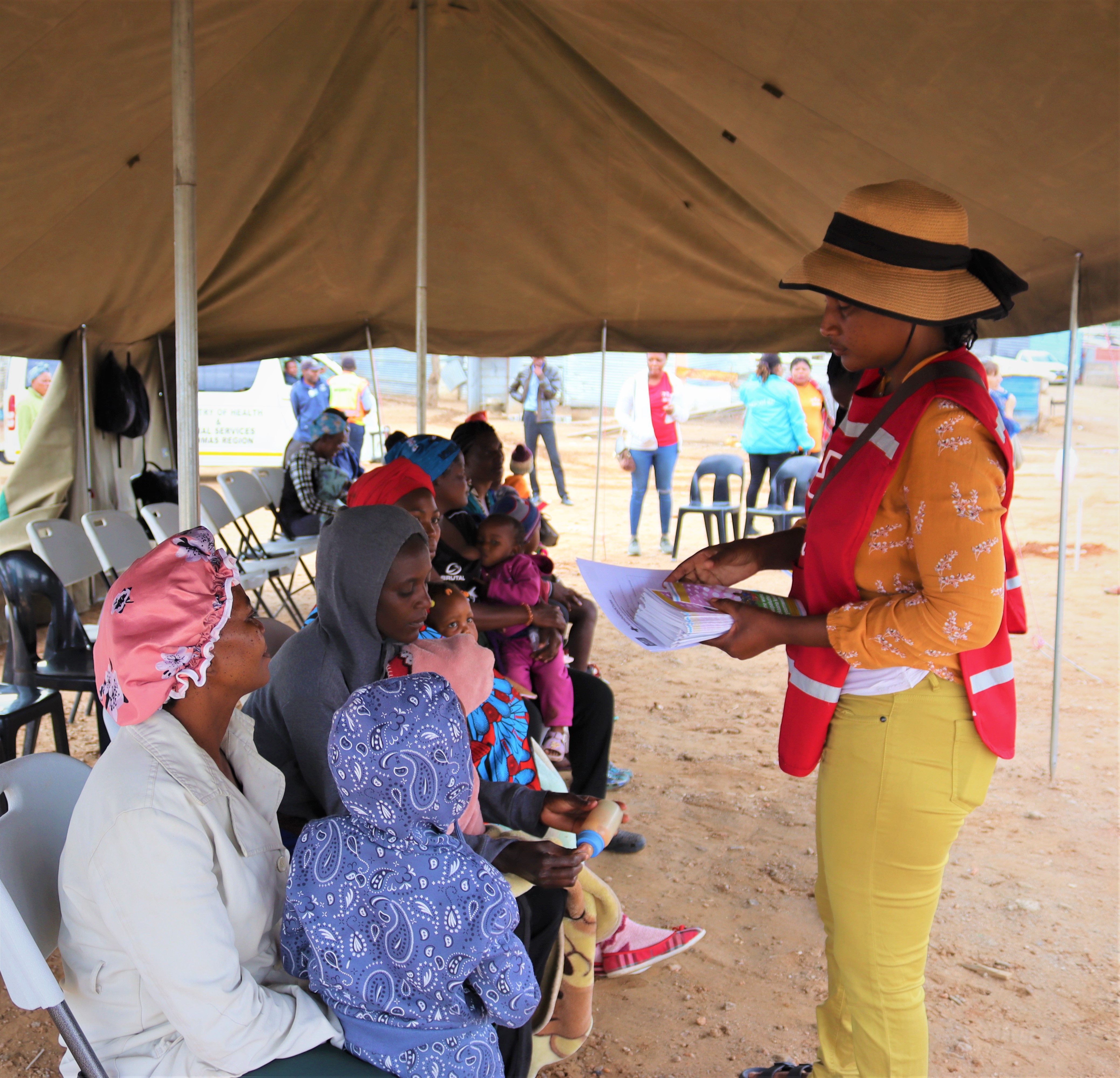
Individually, the team is supposed to reach out to at least ten people. “But as you saw we go beyond that,” said Johannes. Red Cross reached over 10,000 households in the 3 selected regions and reached close to 120,000 individuals with health information through Risk Communication and Community Engagement in the Khomas, Omusati and Ohangwena regions. Additionally, 10 087 pamphlets were distributed.
The Deputy Minister of Health and Social Services, Dr Esther Muinjangue is thankful for the support of development partners such as the WHO and the NRCS.
“The skills and capacities of institutional and community healthcare workers as well as the strengthening of the health system including nutrition services would assist the Ministry of Health and Social Services in mitigating the adverse effects of potential emergencies on nutritional status as well as morbidity and mortality among women and children in the future,” she explains.
Tel: +264 (0) 61 255 121
Email: kaunatjikec [at] who.int (kaunatjikec[at]who[dot]int)